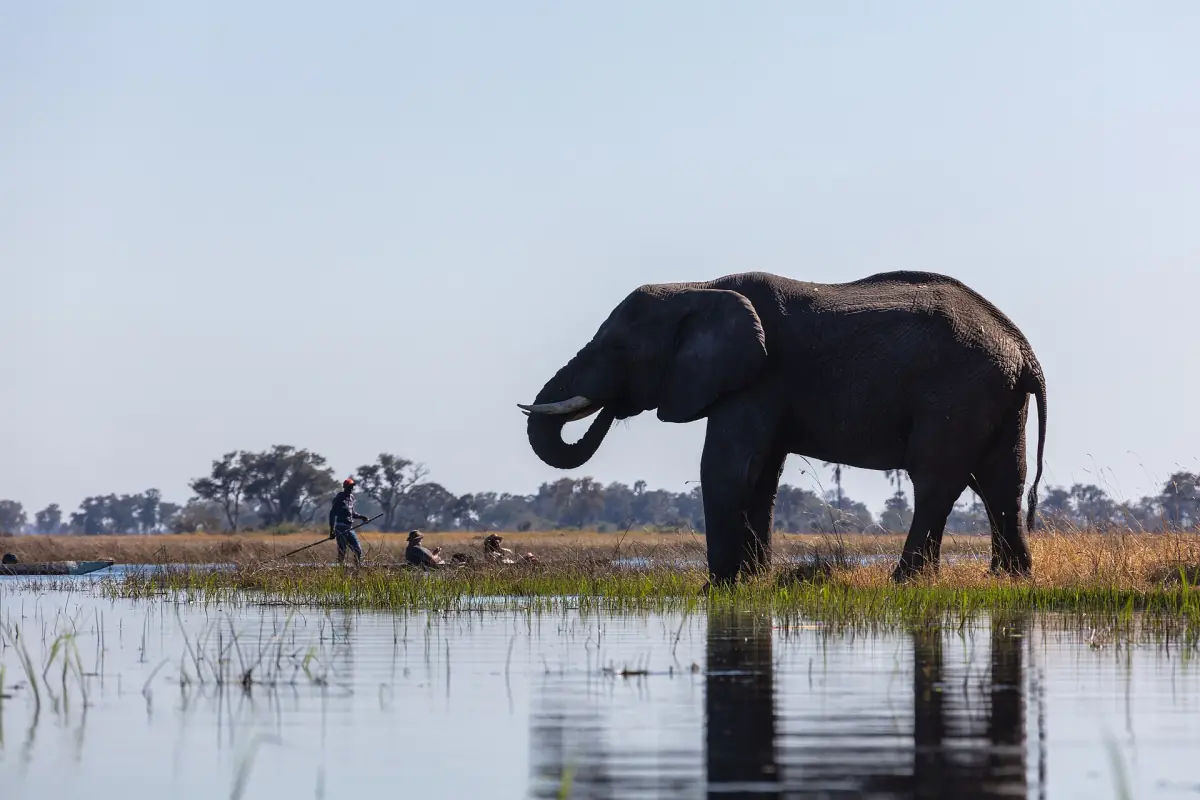
Okavango Delta animals and their habitats
Okavango Delta animals include elephants, lions, African wild dogs, red lechwe, hippos and crocodiles. Their presence belongs to a wider landscape of permanent water, seasonally flooded grassland, islands and drier ground. This inland wetland in northwestern Botswana offers several ways to observe wildlife, but each outing explores a particular part of it. A day on a mokoro and a day in a safari vehicle provide different perspectives.
Choose the observation format before making a list of hoped-for sightings. Guided water trips combine the channels with time on foot, while Moremi outings centre on game drives. The Delta extends beyond Moremi into other concessions and community-managed areas. Our Delta overview explains that landscape, and the tour comparison helps you choose an activity.

Wildlife experiences
The mokoro trip includes a guided nature walk, while the Moremi drives explore wildlife by vehicle. Check park entry for the early-pickup tour; the other Moremi trip lists park and gate fees.
Hand-picked tours, booked through GetYourGuide and Viator. Prices are indicative starting prices in US dollars (as of November 2026). Tap a tour for live availability and the current price in your currency.

Moremi wildlife day trip
- In-person English guide
- Park and gate fees
- Lunch and snacks
Confirm the meeting point before booking. Wildlife sightings are not guaranteed.
Check availability →
Moremi game drive from Maun
- Wildlife safari in Moremi
- Picnic lunch
- Return journey to Maun
Park entry is not expressly listed as included; check before booking. Confirm your pickup address and time.
Check availability →
Mokoro and guided nature walk
- Transport to mokoro station
- Experienced local poler
- Wildlife observation
The nature walk is guided. Confirm the pickup location and time; wildlife sightings are not guaranteed.
Check availability →Guided wildlife observation on water and land
An eight-hour mokoro and bush-walk outing explores water and islands; Moremi safaris offer eleven- and twelve-hour vehicle-based alternatives with different included services.
Mokoro observation and a guided bush walk
The eight-hour mokoro and bush-walk outing includes a pre-tour briefing, transport to the mokoro station, a local poler acting as guide, a mokoro safari, guided nature walk and wildlife observation. It suits travellers who want to experience the wetland near water level and continue on foot with a guide. The combination puts the landscape itself at the centre of the day, alongside opportunities to watch animals.
Arrange the exact collection point and departure time for this outing. Plan food separately and establish which park charges apply to your booking, since meals and park admission are outside its stated inclusions. For more about the boat, station transfer and walking element, read the mokoro trip guide. Walking here means a guided nature activity rather than an independent trail between wildlife areas.
Moremi game drives from Maun
The eleven-hour Moremi day safari starts with early hotel pickup in Maun, followed by the drive to the reserve, wildlife safari, picnic lunch, afternoon game drive and return to Maun. The early collection is part of the transport schedule. Park admission needs separate clarification for this package; it is not included among the listed services. This outing suits travellers wanting a day built around observation from a vehicle.
The twelve-hour Moremi safari from Maun includes an in-person English-speaking guide, park and gate fees, lunch, snacks, bottled water and soft drinks. Set the meeting arrangements for this particular safari separately from its included services. Compare those practical differences on the Moremi day-trip page. Access to the reserve and the day’s route are separate matters from access to camps elsewhere in the Delta.
Birds and seasonal observation
Birdwatching is another way to engage with the wetland, including during guided water and nature outings. Treat it as time spent observing habitat rather than a promised species list. Water and food availability influence wildlife observation more broadly, and the animals you encounter depend on local conditions on the day. Allow the guide to shape the activity around local conditions.
Local summer rain and the delayed river flood follow different rhythms. The historical flood pattern includes a dry-season pulse around June and July, but individual channels and camps have their own conditions. Mokoro access remains dependent on local water levels. The best-time guide explains the monthly framework, helping you plan an activity without turning a seasonal pattern into a fixed wildlife appointment.
Safety with a guide
Hippos and crocodiles are reasons to keep out of Delta waterways: do not swim in channels or lagoons. Follow the poler’s instructions during a mokoro outing and the guide’s directions on land. Leave wildlife space, avoid feeding or disturbing animals, and let the guide manage how the group approaches an observation. A guide brings local experience while the setting remains wild.
Camps can be unfenced, so supervise children and use designated camping areas. Vehicle safaris, guided walks and camp arrangements each have their own operating rules; night drives or off-road activities in a concession do not create general visitor rights in Moremi. Plan travel-health advice alongside your activities, as the Okavango is a malaria-risk area. For overnight planning, compare the different accommodation locations and their access arrangements.
Questions about Delta wildlife
Which animals live in the Okavango Delta?
Elephants, lions, African wild dogs, red lechwe, hippos and crocodiles occur in the Delta. A particular outing explores only part of their habitat, and sightings vary with water, food availability and animal movements.
Can I observe wildlife on a mokoro trip?
Yes. The eight-hour guided mokoro and bush-walk package explicitly includes wildlife observation, a local poler and a guided nature walk. It combines the water-level view with an accompanied land activity.
Can I swim during a wildlife outing?
Keep out of the waterways because of hippos and crocodiles. Use the guided activities to experience the wetland and follow the safety briefing for both the mokoro and the walk.
Do all Moremi day trips include park fees?
The twelve-hour safari described here includes park and gate fees. Establish the admission arrangements separately for the eleven-hour picnic-lunch safari, whose listed services cover the drive, safari, lunch and return to Maun.