Choosing the best time to visit the Okavango Delta
The best time to visit the Okavango Delta depends on whether you want a mokoro outing, wildlife viewing or a stay in a particular part of the wetland. April to October is the period Botswana’s tourism guidance favours for weather and wildlife viewing. Treat that as a useful starting point, then match the dates to the location and activities you actually want.
The delta contains permanent wetlands and seasonally flooded grassland. Rain falling around Maun is different from river water arriving later from the upstream catchment. A dry month can therefore coincide with a flood pulse. Choose a location as well as a month: assess the particular channel and its water conditions before choosing your canoe outing.
Use the mokoro trip guide for water-based outings and the wildlife guide for the different ways of observing animals. Keep your route through Maun and your overnight base in the same plan.

Flood season and local rain are different
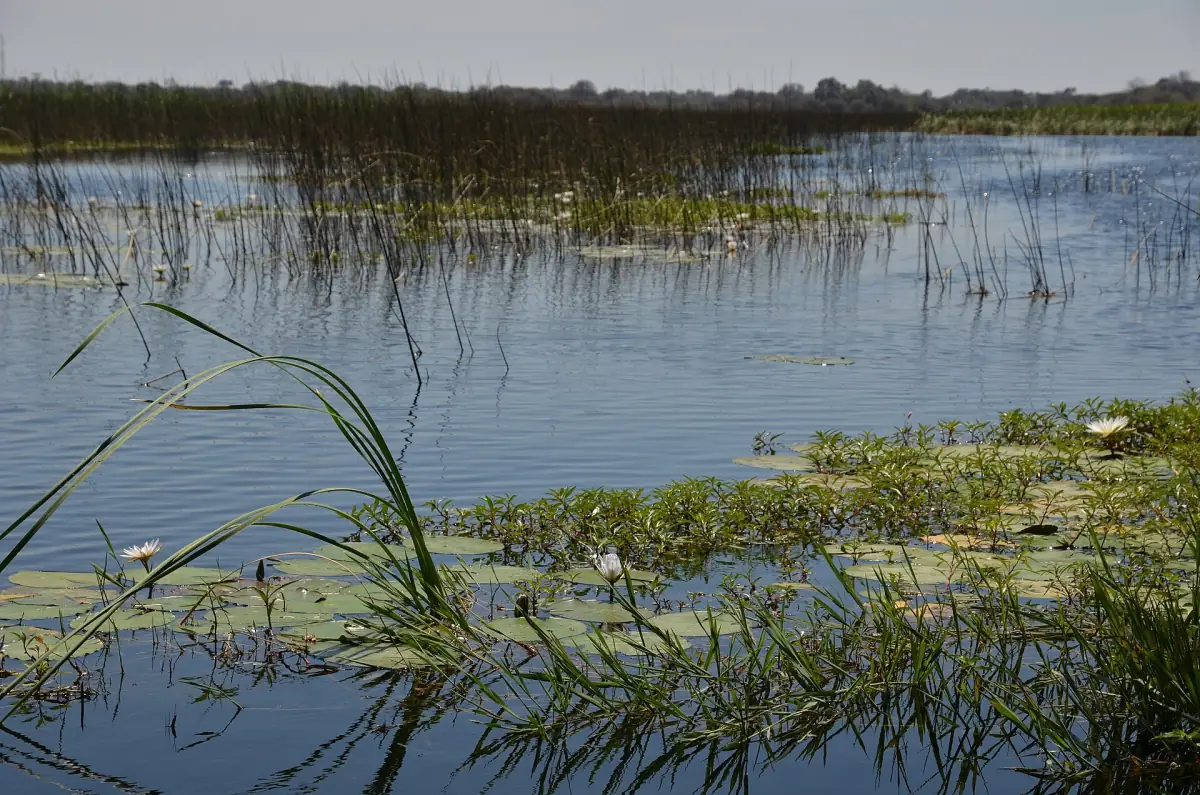
The delayed flood is central to the delta’s character. UNESCO’s historical description identifies June and July as the period when the flood pulse arrives during the dry season. That pattern helps explain the landscape; it is not a prediction of the highest water at every camp, nor a timetable for an individual mokoro route.
The green season offers lush vegetation, young animals and migratory birds. Wildlife movements depend on water and food, so neither the dry nor the wet season guarantees a particular encounter. For a water-focused day, the mokoro option featured here includes transfers to and from a Maun hotel, bottled water, soft drinks, and fees and taxes. Its water activities still depend on local water levels. Arrange your food for the day according to the meals explicitly included in your booking.
A water-based day trip
This mokoro outing includes Maun hotel transfers; check local water levels when planning your dates.
Hand-picked tours, booked through Viator. Prices are indicative starting prices in US dollars (as of November 2026). Tap a tour for live availability and the current price in your currency.

A water-dependent mokoro day from Maun
A mokoro outing with Maun hotel transfers, bottled water, soft drinks, fees and taxes; choose dates with local water conditions in mind.
January to April: rain and transition
January: Summer rain is part of the seasonal picture, and January is among the main rain months. Plan activities around local conditions rather than equating a rainy day with the flood level at your destination.
February: Another main rain month, still within the summer season. A water-based itinerary needs a location-specific discussion even when the wider landscape is green.
March: The summer and rainy-season framework continues. Do not build a connection around a supposed fixed arrival date for the river flood; individual access routes need their own assessment.
April: A transition month and the beginning of the broadly favourable April-to-October travel window. Assess road access and channel levels for your specific destination and dates.
May to August: dry winter and the flood pulse
May: The dry winter begins. Your camp’s position within the permanent or seasonal wetland remains important when choosing a water programme.
June: Dry winter overlaps with the historical June-and-July flood pattern. This is why local rain is a poor shortcut for judging water in the delta.
July: The same historical flood framework applies, without implying a simultaneous peak throughout the wetland. Select activities using the conditions at their actual departure point.
August: Still within the dry winter. Avoid treating the end of the climatic winter as proof of a particular water level or a universal operating season for boats.
September to December: transition back to summer
September: A dry transition period. A seasonal description does not establish that every road or crossing is open; check the intended road leg separately.
October: A transition towards the rains. Neither a canoe channel nor a motorboat route can be promised from the month alone.
November: Summer begins with rain. Local rainfall is not evidence of a new delta-wide flood peak, so keep rainfall and river-water planning separate.
December: Summer and rainy-season conditions continue. Water activities remain location-dependent, including during a stay marketed around the wetland.
Okavango Delta weather and Maun temperatures
Maun is a reference point at the edge of the delta, rather than a weather station for every camp. JMA’s station table gives monthly mean air temperatures: January 26.7°C, February 26.4°C, March 25.9°C, April 24.0°C, May 21.0°C and June 18.2°C. The remaining means are July 17.9°C, August 21.2°C, September 25.5°C, October 28.7°C, November 28.2°C and December 27.1°C.
These are monthly means, not daytime highs or overnight lows. Use a forecast for packing and departure decisions, rather than interpreting a monthly average as the temperature of your game drive. Leave road and flight arrangements flexible enough to respond to the conditions on the day. The arrival guide explains the separate flight and road stages; compare accommodation areas before fixing an activity-heavy itinerary.
Frequently asked questions
Is the rainy season also the flood peak?
Local summer rain and the delayed upstream flood are different processes. The historical June-and-July flood pattern falls in the dry season, but water levels differ between locations.
Can I book a mokoro trip for any month?
Choose a departure and discuss the local water conditions for your date. Plan the actual route with the departure station, using its local conditions rather than a general monthly calendar.
Does dry weather make all roads usable?
Road planning needs current advice for the exact route, including crossings and bridges. Dry-season dates do not replace that assessment. For health preparation, arrange travel-medicine advice for the delta rather than treating dry weather as protection from malaria.
Match your travel dates with delta activity ideas for water, land and air.